The streaming world is full of jargon — IPTV, M3U, EPG, HEVC, VOD, Xtream Codes. This glossary explains the most important streaming and IPTV terms in plain English, with links to deeper guides where you want more detail. Bookmark it as your quick reference.
Core concepts
IPTV (Internet Protocol Television) — television delivered over the internet instead of cable or satellite. See our full IPTV guide.
Streaming — watching media delivered over the internet in real time, without downloading the whole file first. The umbrella term for streaming TV services.
Cord-cutting — cancelling traditional pay TV in favour of streaming.
Live TV streaming — watching real-time channels online, as opposed to on-demand. Great for sports and news.
VOD (Video on Demand) — a library of content you watch whenever you want, rather than on a schedule.
Catch-up / Time-shift — replaying recently aired programs.
Playlists & delivery
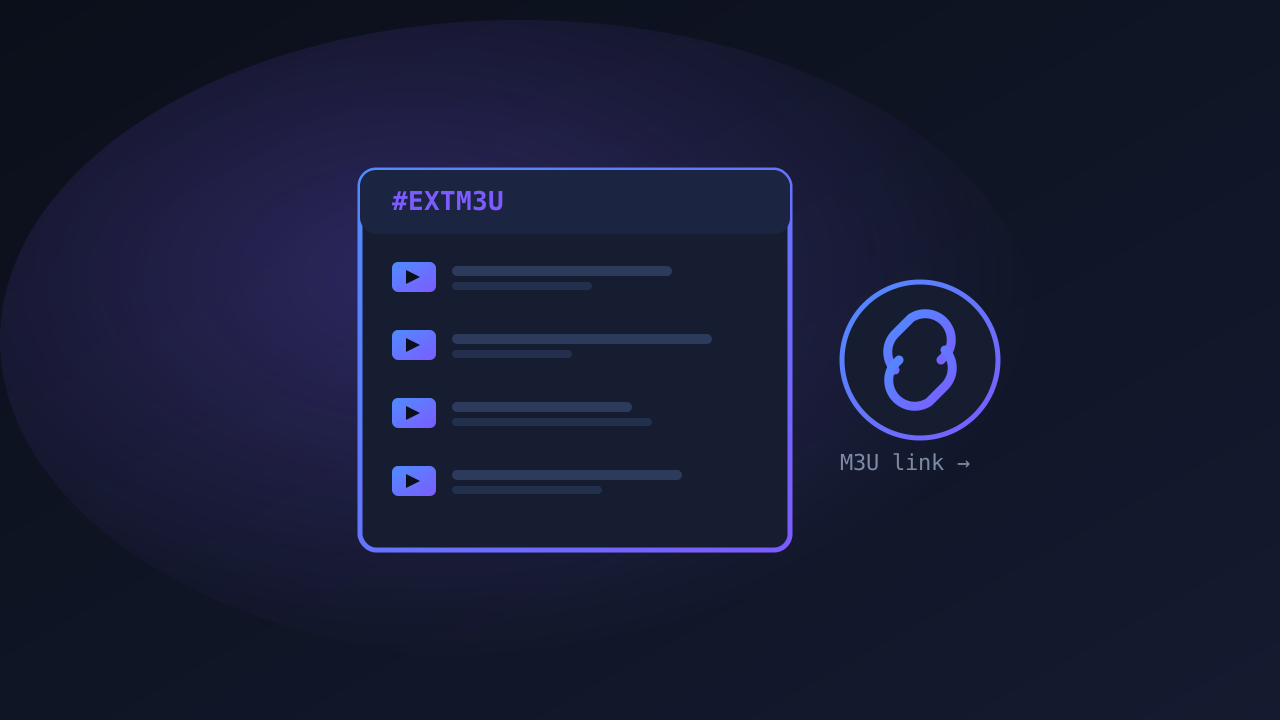
M3U — a text playlist file listing channels and their stream URLs.
M3U link — a single URL that always points to your current M3U playlist.
M3U8 — the same format encoded in UTF-8.
Xtream Codes — a login-based way (server + username + password) to fetch channels and guide data together.
Portal / MAC URL — a login method used by some set-top boxes like the MAG box.
HLS (HTTP Live Streaming) — a common protocol for delivering streams that adapt to your connection speed.
The program guide
EPG (Electronic Program Guide) — the on-screen TV schedule showing what’s on now and next.
XMLTV — the file format EPG data is usually delivered in.
tvg-id — the identifier that matches a channel to its EPG data.
Quality & performance
Resolution — the detail of the picture: SD, HD (720p/1080p), and 4K / Ultra HD.
Bitrate — how much data per second a stream uses; higher generally means better quality.
HEVC (H.265) — a modern codec that delivers the same quality at roughly half the bandwidth — ideal for 4K.
H.264 (AVC) — an older, universally compatible codec.
Buffering — pausing while the player waits for more of the stream to download, usually caused by a slow or unstable connection.
Transcoding — converting a stream to a different format or quality on the fly.
Bandwidth — your available internet speed, measured in Mbps.
Devices & apps
Streaming stick — a small HDMI dongle like the Firestick.
TV box / Android TV box — a fuller set-top device running Android TV.
MAG box — a dedicated IPTV set-top box.
Player app — software like TiviMate that displays your channels; it provides no content itself.
Sideloading — installing an app outside the official store (possible on Firestick/Android, not Roku).
Simultaneous connections — how many screens a subscription allows at once.
Service & legal terms
Provider — the service that supplies your channel lineup.
Subscription — your paid plan with a provider.
Licensing / rights — the legal permission a service needs to distribute channels. This is what separates a legal service from an illegal one.
The bottom line
Now that the jargon makes sense, you’re ready to build a great setup. Start with what IPTV is, learn about M3U playlists and the EPG, pick the right device, and choose a reputable provider. Keep this glossary handy as you go.